Nano-CarbonCapS is funded by the Research and Innovation Foundation of the Republic of Cyprus under the “CODEVLOP-REPowerEU” Grant, Call 1223, Program “CODEVELOP” of RESTART 2016-2020. The project was launched in July 1st, 2024 and is expected to be completed by June 30th, 2026.
Project Summary
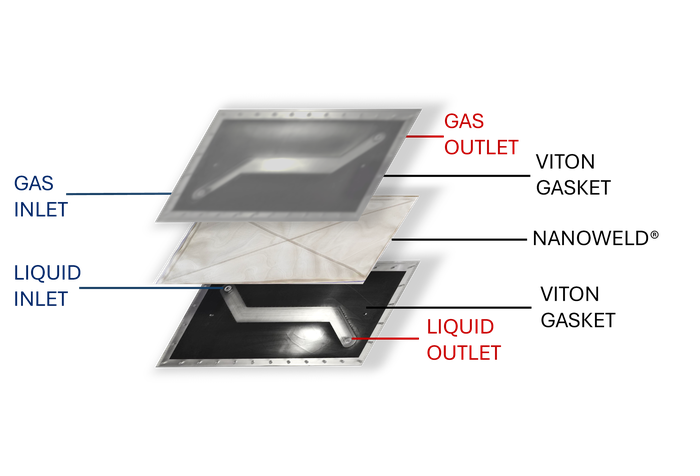
The scope of Nano-CarbonCapS is to develop a small-scale, portable intensified membrane device that delivers more effective CO2 capture (CCS) compared to incumbent technologies, whose deployment is not confined to large-scale power plants (as incumbent systems), but also in smaller localised sites. The device to be developed in this proposal will be designed for CO2 removal but could equally be used to remove pollutants such as NOx, CO, CH4, H2S and SO2. By the end of the project, a prototype device will have been developed and demonstrated at an industrial site, reaching a TRL between 6 and 7.
The innovative nature of this work lies in the combination of a novel intensified nanofibrous membrane reactor (IMR) with different forms of ionic liquids (ILs) and/or Deep Eutectic Solvents (DESs), the design of which will be fully optimized via computational modelling to achieve the highest efficiency of CO2 removal: harnessing atomistic modelling to optimize the membrane structure and material selection and computational dynamics for the design parameters and operating conditions.
The general objectives (GO) of Nano-CarbonCapS can be summarized as follows:
GO I. Establish a long-term partnership between industrial and academic partners that goes beyond the current project. This collaboration will combine access to bespoke equipment and processes (e.g. atomistic modelling, computational fluid dynamics, needless electrospinning), highly specialized personnel, academic and industrial competencies, and expertise. The goal is to accelerate development and commercialization of technologies and products, currently in R&D, to offer a competitive CCS solution for industrial applications.
GO II: Leverage upon partners’ expertise on nanoparticles and polymer nanofibers as well as on ILs and/or DESs solvents development to create nanofabrics with adequate mechanical integrity and hydrophobic performance, combined in a novel intensified nanofibrous membrane reactor to allow efficient capture of CO2. Combine atomistic modelling for optimization of nanofibers physical properties (i.e. mechanical, hydrophobicity, biocompatibility) and CFD modelling for optimization of membranes geometry and CO2 capture mechanism from ILs/DESs.
GO III: Use novel, certified methodologies to assess CO2 capturing efficiency of the intensified nanofibrous membrane reactor to accelerate adoption of the technology in industrial applications. Investigate the methods for producing Nano-CarbonCapS textiles at large scale and implement the necessary quality control measures and standards to reach product and processing development at TRL 6 to 7 by the end of the project.
The project CODEVELOP-REPowerEU/1223/0118 was funded by the Research and Innovation Foundation, under the “RESTART 2016 - 2020” Programme and through the European Union Recovery and Resilience Facility (RRF) of the NextGenerationEU instrument.

Project News
2024
July: Project Launch
July: Initiation of dissemination strategy and implementation
July: Kick-off meeting at AmaDema
September 16th: Consortium Technical Meeting #1
October 24th: Consortium Technical Meeting #2
2025
April: AmaDema presented a poster presentation entitled “Novel nano-enabled membranes for Carbon Capture (CSS) Systems for industrial post combustion processes at the 8th European Symposium on Electrohydrodynamic Atomization and Electrospinning, in Nicosia, Cyprus.
May 21st: Consortium Technical Meeting #3
June 24th: Consortium Technical Meeting #4
June 24th: Workshops organized by AmaDema and CUT
August 28th: Consortium Technical Meeting #5
September 26th: Consortium Technical Meeting #6
November: CUT presented at 1st Pancyprian Chemistry Conference (PCC) two poster presentations entitled “Enhancement of CO2 capture using supported liquid membranes with immobilized deep eutectic solvents (DES) “and “Integration of Ionic Liquids in Reactor Systems for CO₂ Capture: Challenges and Future Prospects” at Nicosia, Cyprus.
December: CYI presented an oral presentation entitled "Atomistic Insights into CO₂ Capture Efficiency of PVDF/Ionic Liquid Composite Membranes" at the 15th International Conference of the Hellenic Polymer Society (POLYCONF15), held in Patras, Greece.
2026
February 20th: Consortium Technical Meeting #7
March 31st: Consortium Technical Meeting #8
May 25th: Consortium Technical Meeting #9
June: CUT presented at the 15th Panhellenic Scientific Conference on Chemical Engineering (PESXM15), one oral presentation entitled “Experimental and Computational Study of CO2 capture with conventional and Deep Eutectic Solvents in a Tube-in-Tube Teflon AF-2400 Membrane Reactor” at Chania, Greece.
June: AmaDema participated in the 22nd European Conference on Composite Materials (ECCM22), held in Oslo, Norway and presented a poster presentation entitled “Electrospun nanofibrous membranes for enhanced Carbon Capture and Storage (CCS) in industrial post-combustion processes”.
June: Workshops organized by AmaDema
June 30th: Consortium Technical Meeting #10
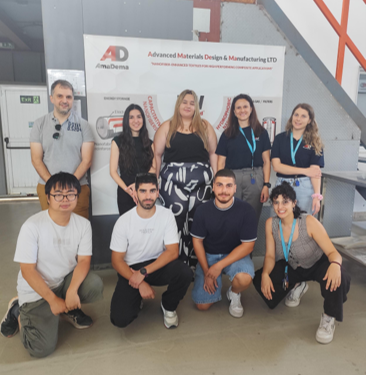
Figure 1: Participants of the workshop organized by AmaDema.
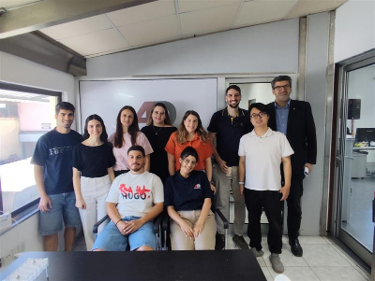
Figure 2: Participants of the workshop organized by AmaDema.